It’s not about protecting technology. It’s about growing your business.
Most people focus their IP efforts on protecting core technology. Usually, that’s something pretty exciting.
But here’s the thing – customers don’t care how your AI or product works. They care about the value they receive. And competitors will also find a way to deliver that value, one way or another. In other words, your core technology doesn’t matter as much as the business value you deliver.
Taking off your ‘technology goggles’ allows you to see what really matters. You’ll often discover that some of your other technologies – sometimes simpler ones – play a more important role than you realized in delivering your value. Technologies you might have overlooked entirely (with goggles on).
So don’t get trapped into thinking an IP strategy should “protect your technology.” A strategy responsive to what engages customers, and anticipates real competitive responses (not just “copying”), will help you leverage business opportunities far better than a narrow technology focus ever could.
Remember: the whole point of managing IP is to improve your business. And that requires a relentless business focus. In lean startups, everything must support the business.
But “protecting technology” just isn’t a business goal. It’s not.
Your real goals are things like attracting customers, finding market fit, securing investors – maybe even getting acquired. A business-first IP strategy can serve these real goals.
But how do I actually take a “business-first” approach to developing and refining your IP strategy?
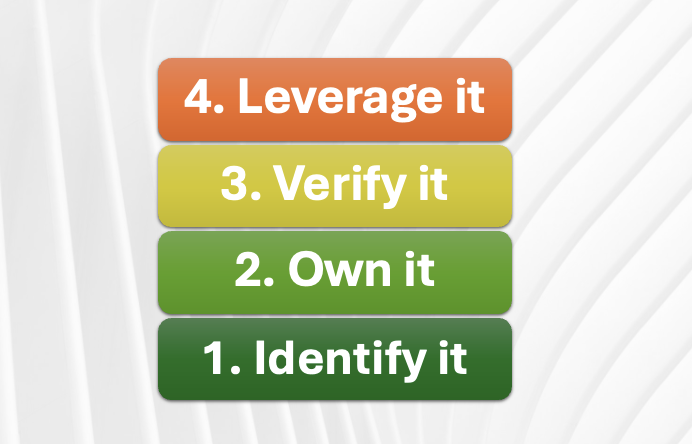
With a visual tool that I created, called the ‘IP Strategy Stack.’
The IP Strategy Stack breaks the IP strategy development process down into four focused steps, working from the ground up to ensure a solid foundation:
1. Identify important IP.
Not all your IP matters equally. Focus on what drives your differentiation, value proposition and what sets you apart in customers’ eyes. That’s the IP you need to focus your strategy on.
2. Own important IP.
Often, IP is your startup’s primary asset (besides a few laptops and an office lease). Ownership of IP also provides control, meaning you can do what you want with it, without having to ask someone else for permission. But ownership of IP doesn’t happen automatically – this needs as much attention as equity ownership in your business.
3. Verify you can use it.
Are you legally clear to use the IP and data you rely on? Restrictions in contracts, third-party data rights and consents, open-source licenses, and relevant patents could limit your options, and you can’t let yourself be surprised by those.
4. Leverage your IP.
This isn’t old-fashioned “protection.” Instead, think how secrets, open-source releases, or patents can help your IP work harder to reach business goals.
Follow the IP Strategy Stack method, and you’ll build something that actually serves your business. The right starting point makes all the difference.
